Welcome to the EPOS Platform

A multi-disciplinary open platform for integrated access to Solid Earth science datasets
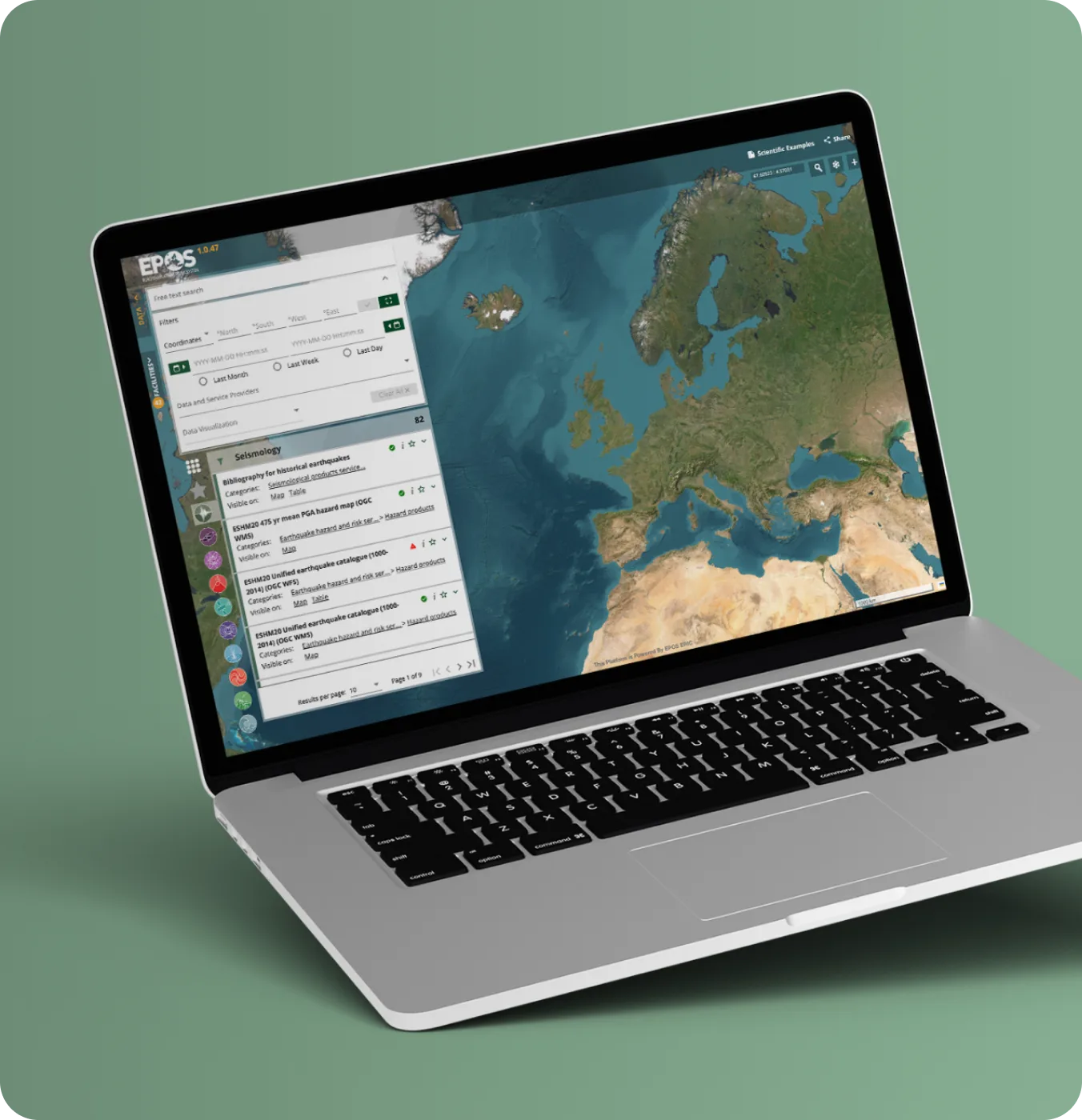
Laptop showing the EPOS ICS-C data portal interface with a map of European data providers

Data and Service Providers

767

Field of poppies and wheat

Terabytes of Integrated Data

>800

Data Services

330

Unique Visitors

>16000

Scientific communities

Each community provides access to its resources through European-wide services called Thematic Core Services (TCS).

Anthropogenic Hazards icon

Anthropogenic Hazards

Geological Information and Modeling icon

Geological Information and Modeling

Geomagnetic Observations icon

Geomagnetic Observations

GNSS Data and Products icon

GNSS Data and Products

Multi-Scale Laboratories icon

Multi-Scale Laboratories

Near-Fault Observatories icon

Near-Fault Observatories

Satellite Data icon

Satellite Data

Seismology icon

Seismology

Tsunami icon

Tsunami

Volcano Observations icon

Volcano Observations

Technical documents

A collection of reference documents to better understand the technical aspects of the EPOS ICT framework.

Since EPOS Preparatory Phase, a number of reference documents has been produced. Such Documents can help the various stakeholders to better understand the technical aspects of the EPOS ICT framework.

EPOS ICT Summary

A deliverable from EPOS PP where the prototype and the metadata are better discussed.

PDF

Technical

Integration Guidelines Level 1

A generalistic flyer that explains the technical aspects of EPOS.

PDF

Technical

EPOS Data Policy

EPOS Data Policy outlines the framework for managing, sharing, and protecting solid Earth science data within the EPOS Research Infrastructure.**The policy establishes core principles aligned with FAIR, TRUST, CARE, and GEO data principles, emphasizing openness, collaboration, and accountability while ensuring compliance with EU regulations (e.g., GDPR, Data Governance Act). It defines roles for Data Providers, Service Providers, and functional roles (e.g., Data Stewards, Curators) across the EPOS Data Lifecycle, which spans data provision, integration, and access/reuse.Key aspects include standardized metadata (EPOS-DCAT-AP), flexible access tiers (open, restricted, embargoed), and a service-oriented architecture that decouples data storage from access mechanisms. The policy also addresses data security, intellectual property rights, and licensing, ensuring ethical and legal compliance while fostering innovation and reproducibility in geoscience research.

PDF

Technical

2025

Integration Guidelines Level 2

A detailed document describing the EPOS architecture on ICS and TCS side.

PDF

Technical

2015

Report on E-infrastructure Prototype

This report describes the state and plans of the EPOS WP6 WG7 (e-infrastructure) team as of M42 of the project. It contains information about RIDE, the architectural design for the EPOS e-infrastructure, a collection of use cases that inform the architectural design including required facilities and service, details about the demonstrator.

PDF

Technical

2015