Technical
EPOS TCS 14 2022 AH
April 2022
Document info
Synthesis
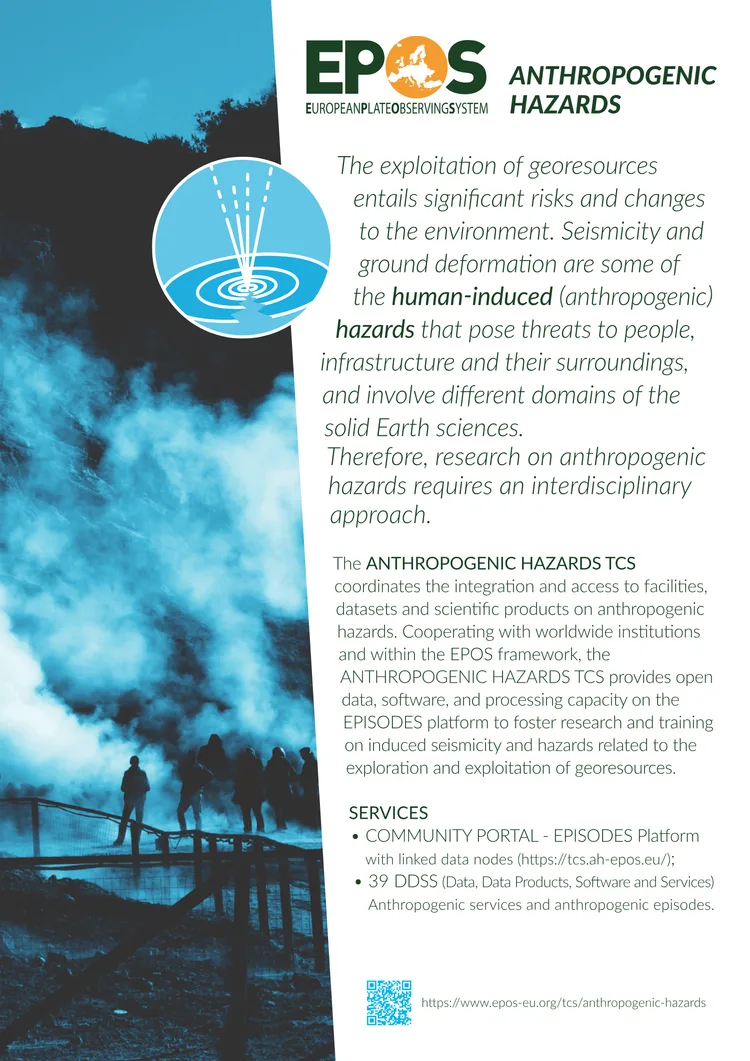
from AIEPOS TCS Anthropogenic Hazards coordinates research on human-induced hazards like seismicity and ground deformation linked to georesource exploitation.
It provides open data, software, and processing capacity via the EPISODES platform, integrating 39 services (Data, Data Products, Software, and Services) to support interdisciplinary research.
By collaborating with global institutions within the EPOS framework, the TCS fosters collaboration among research, industry, public administration, NGOs, and the public to address environmental challenges.
EPOS, as a multidisciplinary infrastructure, ensures long-term access to solid Earth science data, aiming to tackle societal questions on geo-hazards and geodynamic phenomena.
Key points
from AI- 01
EPOS TCS Anthropogenic Hazards focuses on human-induced hazards such as seismicity and ground deformation from georesource exploitation
- 02
Provides 39 services (data, software, processing) via the EPISODES platform for open research and training
- 03
Promotes interdisciplinary collaboration among research, industry, public bodies, NGOs, and the public
- 04
Operates under the EPOS infrastructure, ensuring long-term access to solid Earth science data
- 05
Aims to address societal challenges related to geo-hazards and environmental impacts
Key words
Key prompts
- What services does EPOS TCS Anthropogenic Hazards provide?
- How does EPOS TCS Anthropogenic Hazards support research on induced seismicity?
- Which institutions collaborate with EPOS TCS Anthropogenic Hazards?
- What is the EPISODES platform used for?
- How does EPOS ensure long-term access to solid Earth science data?
Related materials