Technical
EPOS TCS 09 2021 NFO
October 2021
Document info
Synthesis
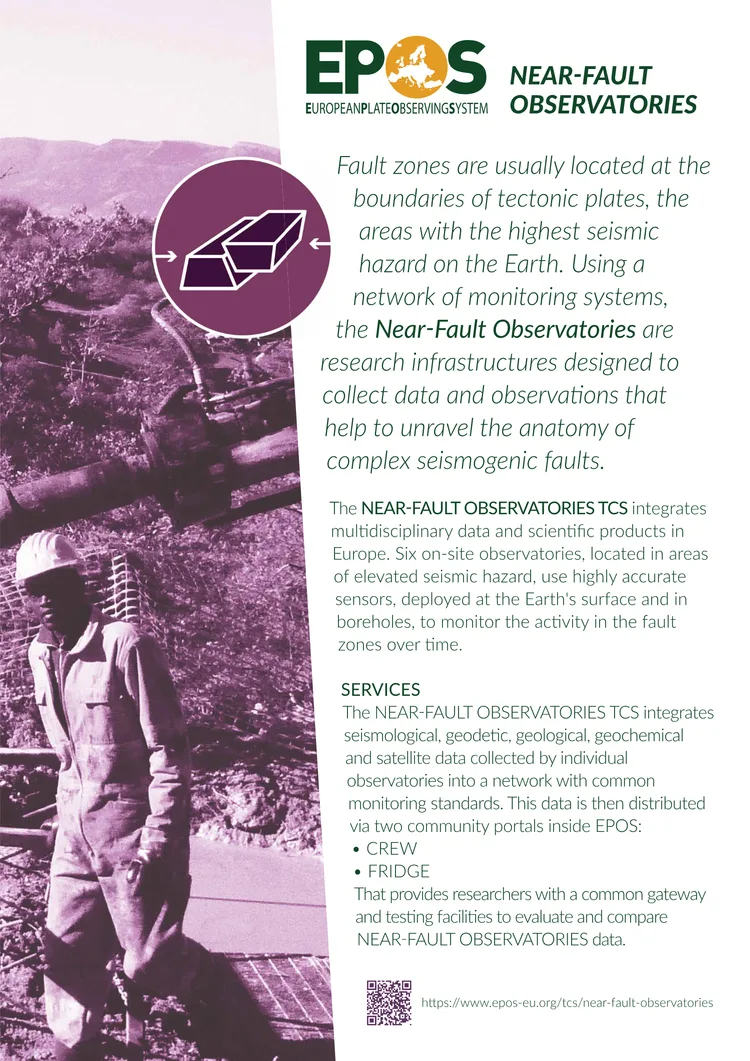
from AIEPOS Near-Fault Observatories TCS is a research infrastructure focused on monitoring active fault zones to enhance understanding of seismic hazards. It integrates multidisciplinary data—seismological, geodetic, geological, geochemical, and satellite—from six onsite observatories across Europe’s high-risk seismic regions.
The TCS provides standardized data via community portals like CREW and FRIDGE, enabling researchers to analyze fault activity in real-time. By fostering data sharing and collaboration, the initiative supports EPOS’s broader mission to improve access to solid Earth science knowledge and address societal challenges related to geo-hazards and environmental risks.
Key points
from AI- 01
Six observatories monitor active fault zones using surface and borehole sensors to collect high-precision data on seismic activity
- 02
Integrates five types of data (seismological, geodetic, geological, geochemical, satellite) under common standards
- 03
Data is distributed via CREW and FRIDGE portals within the EPOS infrastructure for research access
- 04
Aims to improve societal preparedness for earthquakes by studying fault processes in real-time
- 05
Supports EPOS’s mission to provide long-term access to solid Earth science data and services
Key words
Key prompts
- What are the six locations of the Near-Fault Observatories TCS?
- How does the TCS integrate different types of geological data?
- What portals provide access to Near-Fault Observatories data?
- What is the primary goal of monitoring fault zones in real-time?
- How does EPOS support the Near-Fault Observatories TCS?
Related materials